
A Carpet Staircase Renovation Example in Kent

A tired staircase can make an otherwise well-kept home feel dated every time you walk through the hall. This carpet staircase renovation example shows how a considered choice of carpet, edging and professional fitting can turn a high-traffic route into a smart, comfortable focal point - without losing sight of everyday family life.
For many homes across Kent, the staircase sits between the practical demands of the entrance hall and the quieter spaces upstairs. It needs to cope with shoes, pets, children and regular use, while still looking right alongside the flooring, paintwork and furniture around it. The best renovation is rarely about choosing the boldest carpet in isolation. It is about getting the whole detail right.
A carpet staircase renovation example from first look to finish
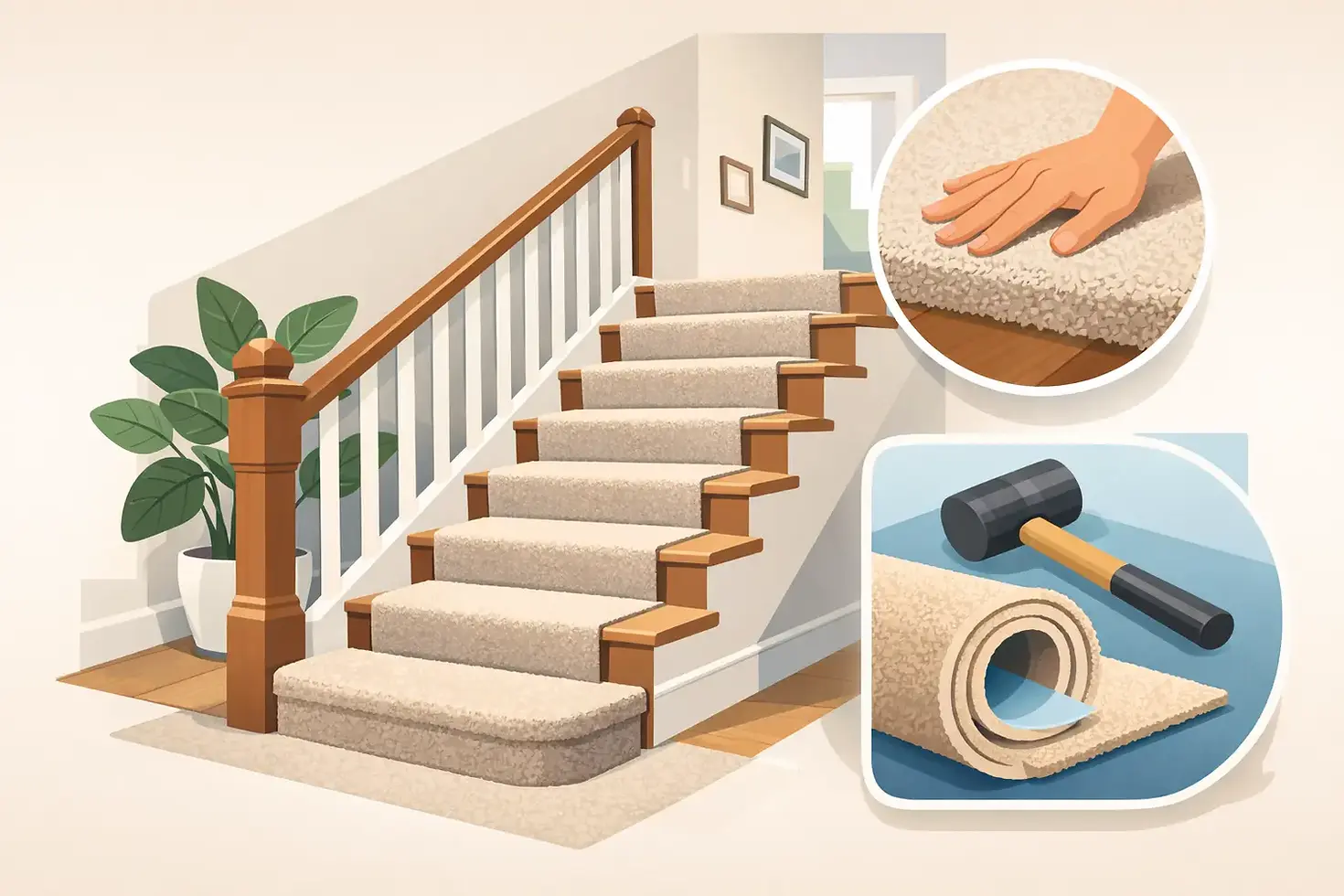
Picture a typical two-storey family home with a narrow entrance hall, painted timber stairs and a worn grey carpet that had flattened on the treads. The previous carpet was practical when first fitted, but its surface no longer recovered after footfall and the edges had begun to loosen. The staircase felt dark, and the hall had none of the warmth the homeowners wanted from the first room guests saw.
The brief was straightforward: create a softer, more refined staircase that would stand up to daily use, complement a light neutral hallway and make the space feel more welcoming. A pale carpet was considered, but quickly ruled out. With a dog and two school-age children, it would have demanded more maintenance than the household wanted.
Instead, a mid-tone textured wool-blend carpet was selected in a warm taupe shade. The colour had enough depth to disguise day-to-day marks, yet it was light enough to lift the painted staircase and walls. Its subtle flecked finish was particularly useful: rather than showing every speck of dust or small scuff, it gave the surface visual movement and a more forgiving appearance.
The homeowners chose a striped border in a deeper charcoal tone. This was fitted along both sides of the runner, framing each tread and creating a tailored look without being overly formal. On a staircase, a border also has a practical visual benefit. It defines the walking line and can make the stairs look more balanced, particularly where the hallway is narrow.
The result was not a dramatic change in architecture. It was a well-specified carpet installation that brought comfort underfoot, reduced the sound of movement between floors and made the hallway feel deliberately designed.
Why the specification mattered
A staircase is one of the most demanding places for carpet. Unlike a bedroom, where pressure is spread over a wider area, people tend to place their feet in the same central section of each tread. This causes pile to flatten more quickly, especially on the lower steps and at turns.
For this reason, choosing by colour alone can be a false economy. A carpet that looks luxurious on a small showroom sample may not be the right choice for a busy family staircase. Fibre type, pile construction, weight, backing and suitability for heavy domestic use should all form part of the decision.
In this example, the wool blend offered a good balance. Wool provides natural resilience and a premium feel, while the man-made fibre content adds durability and helps the carpet cope with the demands of a frequently used staircase. A tightly structured loop or textured twist can both work well, although the choice depends on the household. Loop pile has a distinctive, contemporary appearance, but it may not be ideal where pets with claws could catch the fibres. A quality twist pile is often a reassuring choice for homes that need a softer feel and straightforward maintenance.
The carpet was fitted over a suitable underlay rather than laid directly on the timber. Good underlay makes a meaningful difference on stairs. It supports the carpet, improves comfort and can help reduce the impact of footfall noise. However, it must be appropriate for the setting. An underlay that is too thick can affect how neatly the carpet sits around the stair nosings, so this is a detail best assessed during a measure rather than guessed from a product label.
The detail that makes a staircase look bespoke
The border was the visual feature that changed this staircase from simply carpeted to properly finished. It was not an afterthought. The width, colour and placement were chosen to suit the proportions of the stairs and to work with the hall’s darker door furniture.
Borders are available in many forms, from plain cotton or linen-look tapes to stripes, herringbone designs and bolder contrasting colours. A narrow border can give a restrained, classic finish. A wider stripe is more decorative and can become a feature in its own right. There is no single right answer: a period property may suit a traditional runner with a heritage-inspired trim, while a newer home can look excellent with clean lines and a simple tonal edge.
In this project, the border was carefully mitred around the lower turn of the staircase, so the pattern remained tidy and consistent. Corners, winders and landings are where fitting skill is most visible. These areas need accurate preparation and cutting to avoid a border that drifts, bunches or looks uneven from below.
The homeowners also chose to leave the painted timber visible at each side of the runner. This helped the staircase retain a sense of width and added contrast against the taupe carpet. It is an appealing option, but it does require the exposed timber to be in good condition. Any loose paint, splinters or uneven surfaces should be addressed before fitting begins.
Preparing stairs for a lasting carpet installation
The finish of a staircase renovation depends on what sits beneath the carpet. Before installation, the stairs should be checked for loose treads, creaks, protruding fixings and uneven areas. Carpet can soften minor imperfections, but it cannot correct structural movement or conceal a badly damaged tread indefinitely.
In this example, a few squeaking treads were secured before the carpet was installed. The edges of the stairs were also inspected to make sure the new carpet could be fitted neatly over the nosings. This preparation prevented avoidable problems and helped ensure the finished runner felt secure underfoot.
Professional measuring is especially valuable where stairs are not uniform. Older homes often have slight differences in tread depth, riser height or wall line. A staircase may appear symmetrical at first glance but reveal small variations once each step is measured. Planning around these details protects the overall look, particularly when a patterned carpet or border is involved.
It is also sensible to consider how the staircase connects to the landing. Continuing the same carpet onto the landing creates a cohesive, calm feel. Alternatively, the stairs can be finished as a runner while the landing uses a coordinating carpet, wood-effect floor or luxury vinyl tile. The latter can be striking, but the transition needs careful planning so that heights, trims and colours feel intentional.
Balancing style, maintenance and budget
A carpet staircase renovation can be tailored to a wide range of budgets, but the lowest initial price is not always the most cost-effective route. Stairs are a high-wear area, and a poorly suited carpet can show traffic lanes quickly. Spending a little more on an appropriate quality, supportive underlay and experienced installation can help the finished staircase retain its appearance for longer.
That does not mean every project needs a fully bespoke runner with an elaborate border. A plain, durable carpet in the right colour can look smart and perform very well. For homeowners who want a little more detail, a simple contrasting tape can deliver the runner effect without the cost of a heavily patterned design.
Maintenance should also shape the decision. Regular vacuuming removes grit that can wear down carpet fibres, particularly on stair treads. Prompt attention to spills is useful, and the right cleaning method depends on the fibre content. Avoid saturating the carpet, as excess moisture can affect the backing and take longer to dry on enclosed stairs.
For households with young children, pets or frequent visitors, a mottled mid-tone shade is often more practical than cream, solid charcoal or very pale grey. Dark shades can show lint and dust; very light ones can make marks more apparent. A skilled flooring adviser can help narrow down the options based on how the home is actually used, not simply how a sample appears under showroom lighting.
Choosing help for your own staircase renovation
A showroom visit gives you the chance to see colour, texture and border options at a useful scale, but the final decision should take place alongside a home measure. Natural light, hallway width, existing paint colours and the condition of the stairs all affect what will work best.
At Modeco Interiors, this practical approach means matching premium carpet choices to the demands of your property, then planning the fitting details before work begins. Whether you prefer a calm neutral runner, a traditional bordered staircase or a more contemporary finish, informed advice can make the process feel far less uncertain.
The most successful staircase renovations are often the ones that quietly improve daily life: softer steps in the morning, less noise across the house and a hall that feels considered from the moment the front door opens.


Comments