
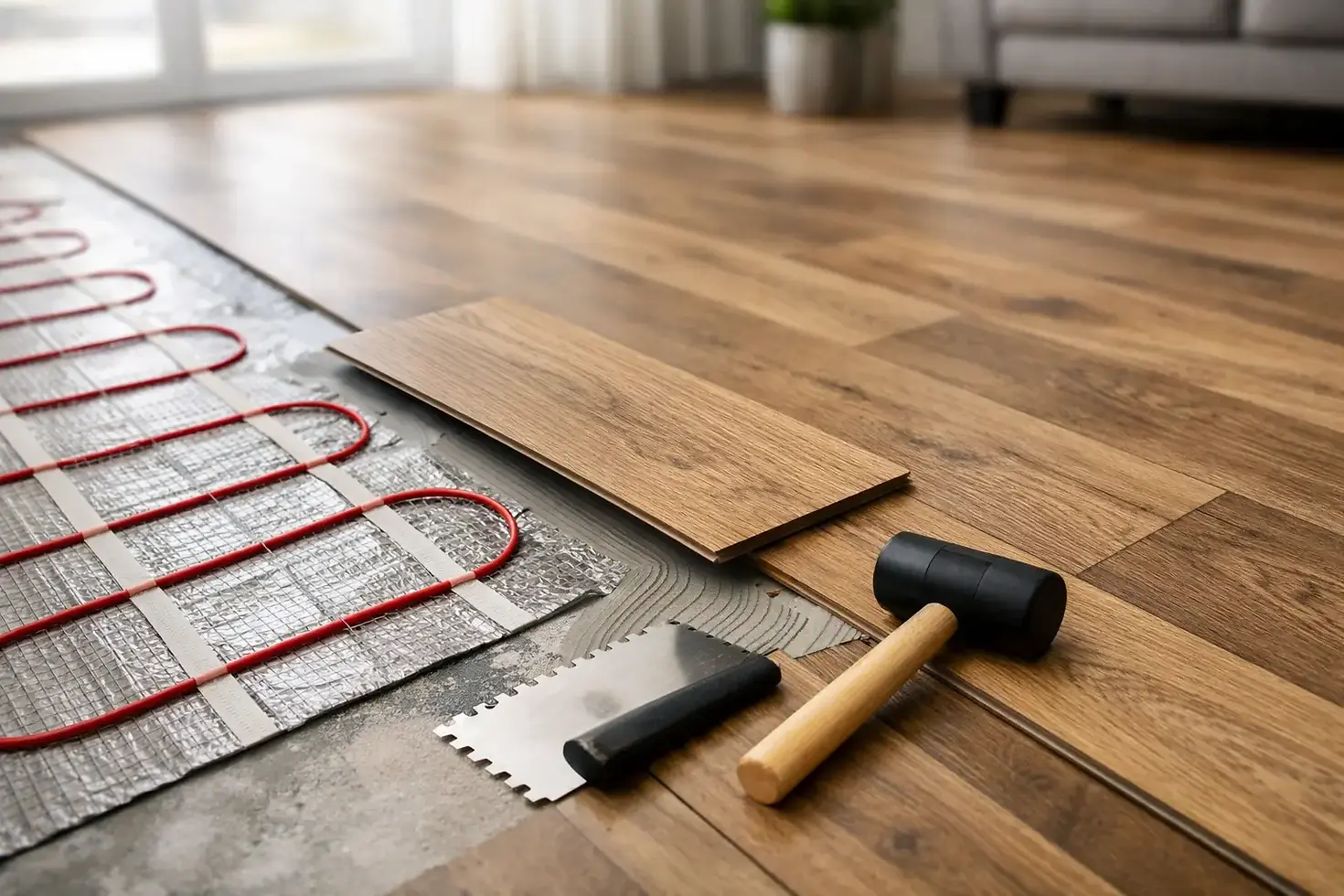
Can You Lay Amtico Over Underfloor Heating?

A cold tiled kitchen at 6am is often what pushes underfloor heating up the renovation list. The next question usually follows quickly - can you lay Amtico over underfloor heating? In most cases, yes, you can. But the real answer depends on the subfloor, the heating system, the temperature settings and how well the floor is prepared before a single tile or plank goes down.
Amtico is a popular choice for homeowners who want the look of wood, stone or abstract design with a finish that feels practical for everyday life. It works particularly well in kitchens, bathrooms, open-plan living spaces and whole-home refurbishments where warmth underfoot matters just as much as appearance. When it is specified and fitted properly, Amtico and underfloor heating can be an excellent combination.
Can you lay Amtico over underfloor heating in every room?
Not automatically. The flooring itself is generally suitable for use with underfloor heating, but the room does not make the decision on its own - the build-up beneath it does. A well-installed water-based or electric system can perform very well under Amtico, provided the whole floor construction is stable and the surface temperature stays within the manufacturer’s guidance.
This is where homeowners can get caught out. They hear that luxury vinyl tile is suitable for underfloor heating and assume that means any existing floor, any heating mat and any adhesive will do. In practice, compatibility is only part of the picture. The quality of the subfloor preparation matters just as much as the product choice.
If the subfloor has movement, moisture issues, uneven patches or old adhesive contamination, those problems do not disappear once the heating is switched on. In fact, heat can exaggerate them. That is why professional preparation is such a big part of a successful result.
Why Amtico works well with underfloor heating
Amtico is often chosen for heated floors because it is dimensionally stable, relatively thin compared with some other flooring types and efficient at allowing heat to pass through into the room. Unlike thick carpet with a dense underlay, it does not create the same insulating barrier. That helps the system respond more effectively.
It also gives you more design freedom than many people expect. If you want a traditional oak effect in a period property, a large-format stone look in a modern extension or a more decorative laying pattern in a hallway, you are not forced to compromise simply because the floor is heated.
That said, good heat transfer is not the same thing as unlimited heat tolerance. Underfloor heating systems must be correctly commissioned and controlled. Excessive temperatures can affect flooring performance over time, so the specification has to be handled carefully from the start.
The temperature limit matters more than most people realise
With Amtico over underfloor heating, surface temperature is one of the key technical points. In most installations, the floor surface should not exceed 27C. That limit is there for a reason. Push temperatures beyond that and you risk issues such as excessive movement, adhesive failure or visible stress within the floor.
This is particularly relevant in homes where people want a very warm floor feel rather than background space heating. Underfloor heating is usually designed to heat the room consistently, not to create a hot floor surface. If your expectations are based on the floor feeling noticeably heated all day, it is worth discussing system performance early so the finish and the heating design work together.
A gradual warm-up and cool-down cycle also matters. Sudden temperature changes can place stress on both the subfloor and the flooring above it. A properly commissioned system avoids sharp swings and helps maintain long-term stability.
Subfloor condition is where success or failure is decided
The biggest difference between an Amtico floor that performs beautifully for years and one that causes problems often comes down to what sits underneath it. Luxury vinyl tile needs a smooth, dry, sound and level base. Underfloor heating does not remove that requirement - it makes it more critical.
Concrete and sand and cement screeds need to be fully cured and tested before installation. If there is residual moisture in the subfloor, fitting over it too soon can create serious issues later. Timber subfloors also need careful assessment. Any flex, deflection or unevenness can telegraph through the finished floor or affect adhesion.
In many projects, the answer is a suitable smoothing compound over the prepared subfloor to create a clean, even surface. Where underfloor heating is involved, the products used for preparation need to be appropriate for heated installations as well. This is not an area for guesswork or shortcuts.
Older properties across Kent often bring extra complications, from uneven floors and mixed substrates to previous floor coverings that leave behind stubborn adhesive residues. None of that means Amtico is off the table. It simply means the floor needs to be assessed properly before recommendations are made.
Electric or water underfloor heating - does it make a difference?
Both can work beneath Amtico, but the installation details differ.
Water-based systems are common in new builds, extensions and larger renovation projects. They tend to sit within a screed or a designed floor build-up and can provide very even heat when properly installed. In many cases, they offer an excellent base for Amtico because the heating elements are well integrated into the floor structure.
Electric systems are often used in smaller areas such as bathrooms, en suites or individual rooms where retrofitting water pipes would be more disruptive. These systems can also be suitable, but they need to be installed exactly in line with guidance and covered appropriately so the finished surface is even and stable.
The key point is not choosing a winner between the two. It is making sure the heating system, subfloor build-up and floor finish have all been considered together rather than as separate trades making separate decisions.
What about laying Amtico over existing tiles with underfloor heating?
Sometimes homeowners ask whether they can save time by fitting over existing ceramic or stone tiles, especially if there is underfloor heating beneath them already. Occasionally that may be possible, but only if the tiled floor is sound, level and prepared correctly. Loose tiles, cracked grout lines and lipping will need attention, and the surface would usually require suitable preparation to provide the right base for the new floor.
This is one of those situations where the shortcut is not always the saving it first appears to be. If the existing tiled floor is unstable, any movement can transfer through. If levels are already tight around doors, kitchen units or thresholds, building up the floor further may create practical problems.
A site inspection is usually the quickest way to work out whether overlaying is sensible or whether lifting back and starting with the right foundation will produce a better result.
Installation timing is crucial
One of the most overlooked parts of fitting Amtico over underfloor heating is the timing. The heating system should usually be commissioned before installation, then turned off for a set period prior to fitting, depending on the system and site conditions. After installation, it should be brought back on gradually rather than turned up at full temperature straight away.
This staged approach helps the subfloor settle, allows adhesives to cure properly and reduces the risk of sudden thermal stress. If any trade on the project is rushing this stage because the room needs to be finished quickly, it can undermine the whole job.
That is why coordinated project management matters. Flooring should not be treated as the final cosmetic layer that simply gets dropped in at the end. It needs to be part of the wider installation plan.
Is Amtico a good choice for busy family homes with underfloor heating?
For many households, yes. It offers the practical appeal families often want - easy maintenance, hard-wearing performance and a wide choice of styles - while pairing well with a modern heating setup. In open-plan kitchens, dining rooms and living areas especially, it creates a clean, consistent finish without the chilly feel some people associate with hard floors.
Landlords and commercial customers can also find it a sensible option where durability and presentation both matter. The important thing is choosing the right product range, installation method and subfloor preparation for the setting.
If you are planning a renovation and want reassurance rather than assumptions, it is worth speaking to flooring experts who can assess the floor build-up as a whole. At Modeco Interiors, that means looking beyond the sample board and considering how the finished floor will actually perform in your home.
A beautiful floor should not leave you worrying every time the heating comes on. Get the specification right from the start, and Amtico over underfloor heating can feel every bit as good as it looks.


Comments