
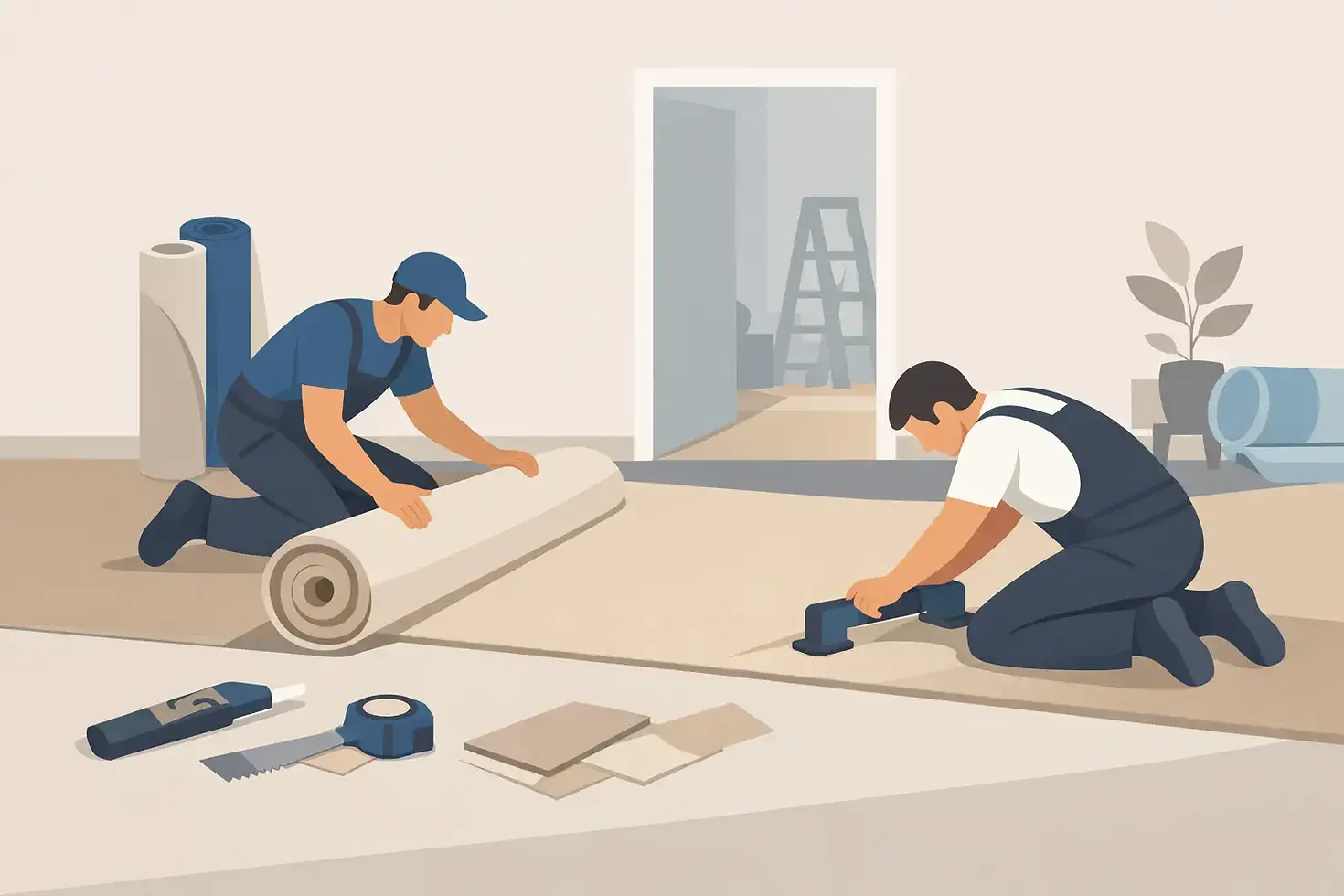
A Carpet Fitting Project Example Explained
- Modeco Interiors

- 13 hours ago
- 6 min read
A carpet can look simple once it is down, but the quality of the result is decided long before the fitter unrolls the first length. If you are comparing quotes or planning a refurb, a clear carpet fitting project example helps you see what actually happens, what can change the price, and why two installations that look similar on paper can perform very differently over time.
For most homeowners, the real question is not just which carpet to choose. It is how the whole job comes together - measuring, subfloor checks, underlay, thresholds, stairs, furniture, and the little site details that can turn a straightforward fitting into a more involved project. That is where expert guidance makes the difference.
A real-world carpet fitting project example
Imagine a typical three-bedroom family home where the client wants to replace tired flooring in the lounge, stairs, landing and main bedroom. The existing carpet is worn through on the stair nosings, there is some creaking in sections of the landing, and the bedroom has heavy furniture that will need careful handling on fitting day.
At first glance, it sounds like a standard carpet job. In practice, each area needs a slightly different approach. The lounge is the largest open space, so the priority is achieving a clean, even finish with minimal visible joins. The stairs and landing need durability and secure fitting because they carry the most foot traffic. The bedroom needs a softer, more comfortable feel, but it also has to work with furniture placement and door clearances.
The project begins with a home measure rather than relying on rough room sizes. This matters because alcoves, wardrobes, radiator pipes, winding stairs and awkward landings can all affect the amount of carpet required. A proper survey also allows the fitter to inspect the condition of the subfloor and identify anything that should be addressed before installation.
What happens before the carpet is ordered
The consultation stage is where many good projects are won or lost. A customer may walk into a showroom thinking only about colour, but performance is just as important. A soft saxony might feel ideal in the bedroom, yet be less suitable for busy stairs than a denser twist pile. Likewise, a cheaper option can look attractive at quote stage, but if it flattens quickly in high-traffic areas, it may not be the best value.
In this project, the recommendation might be a durable twist pile carpet throughout the circulation spaces, paired with a quality underlay that improves comfort and helps the carpet wear better. The client may prefer one consistent look from lounge to landing, or they may choose a practical stair carpet with a different bedroom finish. There is no single right answer. It depends on lifestyle, budget and how each room is used.
At survey stage, the fitter also checks transitions to neighbouring floor finishes. If the lounge meets wood or LVT in the hallway, thresholds need to be chosen so the change in height is neat and safe. Internal doors are another common issue. A thicker carpet and underlay combination may improve comfort, but it can also mean doors need easing to clear the new floor properly.
Subfloor preparation is often the hidden part of the job
One of the biggest reasons carpet installations vary in quality is what sits underneath. In our carpet fitting project example, the landing creaks because a few boards have loosened over time. If that is ignored, the carpet will still be fitted, but the movement beneath it will remain. The finished floor may feel less solid, and the noise will not disappear on its own.
A better approach is to secure the loose sections before fitting begins. In some homes, that may mean minor repairs to timber boards. In others, there could be old gripper, debris, uneven patches or signs of previous damp that need attention. None of this is glamorous, but it has a direct impact on how the finished carpet looks and feels.
This is also why a like-for-like quote comparison can be misleading. One installer may price for fitting only, while another includes lifting old flooring, removing waste, preparing the subfloor and supplying a better underlay. The cheaper figure is not always cheaper once the full scope is understood.
Fitting day - how the project comes together
By the time fitting day arrives, the best projects feel calm because the details have already been sorted. Furniture arrangements have been discussed, access is clear, and the carpet has been planned room by room. That preparation reduces surprises.
In the lounge, the fitter installs gripper around the perimeter, lays and secures the underlay, then cuts the carpet to suit the room shape. The aim is not simply to get it down, but to stretch and tension it correctly so it sits flat and stays that way. A poorly tensioned carpet may start to ripple or feel loose much sooner than it should.
The stairs demand precision. Each tread and riser needs to be fitted securely, with the pile direction considered for appearance and wear. Patterned carpets add another layer of complexity because the design has to run consistently. Even with plain carpet, the nosings need to look sharp and even rather than rounded or bulky.
On the landing and in the bedroom, accurate cutting around door frames, cupboards and corners makes a noticeable difference to the final appearance. This is where experienced fitting shows. The best installations tend to look effortless, but that finish comes from careful workmanship.
What can affect cost in a carpet fitting project example
Homeowners often expect carpet pricing to be mainly about the carpet itself. In reality, several factors shape the final figure. Room size is one, but layout can matter just as much. A simple rectangular bedroom is usually more efficient to fit than a landing with multiple turns and doors.
Stairs also increase labour because they take longer and require more detailed work. Underlay quality affects cost too, yet it is rarely an area worth cutting too hard. A good underlay can improve comfort underfoot, reduce noise and support the life of the carpet. Cheaper underlay may lower the upfront spend, but it can make an otherwise decent carpet feel less substantial.
Then there is prep work. If old flooring needs removing, furniture needs moving, doors need trimming, or subfloors need repair, those tasks should be accounted for honestly from the start. That is not upselling. It is simply good project planning.
Why one carpet choice does not suit every room
A useful lesson from any carpet fitting project example is that flooring decisions are rarely one-size-fits-all. Families with children or pets may need stain resistance and resilience ahead of pure softness. Landlords may prioritise durability and value across multiple rooms. A design-led homeowner may be happy to invest more in a premium finish for a principal bedroom or formal lounge.
The best advice balances all three - style, performance and budget. If one of those is ignored, regret often follows. A carpet that looks beautiful in a sample book but struggles in daily use will not feel like a good investment for long.
That is why showroom support matters. Seeing larger samples, comparing textures properly and talking through where the carpet will be fitted often leads to better decisions than buying on price alone. For customers across Kent, that local, measured approach can remove much of the uncertainty from the process.
The result homeowners actually notice
Once the project is complete, most people do not talk about gripper rods, joins or subfloor checks. What they notice is that the house feels warmer, quieter and more finished. The stairs feel secure underfoot. The bedroom is softer in the morning. The lounge looks cleaner and more put together.
That is the real value of a well-managed fitting. It is not just about installing a floor covering. It is about delivering a result that works day to day and still looks right months later.
At Modeco Interiors, projects are approached in exactly that practical, design-led way - with product guidance, proper measuring and professional fitting working together rather than as separate steps. For homeowners investing in new flooring, that joined-up process usually leads to fewer compromises and a much better finish.
If you are planning new carpet, it helps to think beyond the sample and picture the whole job. The right question is not simply, "How much is this carpet?" but "What will it take to fit it properly in my home?" Ask that early, and you are far more likely to end up with a floor that feels every bit as good as it looks.


Comments