
Amtico Kitchen Flooring Examples to Inspire
- Modeco Interiors

- Jul 4
- 6 min read
A kitchen floor has to put up with more than almost any other surface in the home. Chairs scrape, pans get dropped, muddy shoes come in from the garden and spills rarely wait to be cleaned up politely. That is exactly why so many homeowners start looking for Amtico kitchen flooring examples - they want something that looks considered and design-led, but can also cope with real daily life.
Amtico has earned its reputation by doing both. In a kitchen, that matters. You are not only choosing a colour or pattern. You are choosing how the whole room feels, how it connects to adjoining spaces and how well it will perform over time.
What makes Amtico work so well in kitchens?
The main appeal is flexibility. Amtico gives you the visual effect of wood, stone or more contemporary graphic finishes, but with the comfort and practicality of luxury vinyl tile. Underfoot, it tends to feel warmer and quieter than ceramic tiles, and it is generally easier to live with in busy family kitchens.
Design choice is another major reason people gravitate towards it. Kitchens rarely follow one formula now. Some are open-plan and minimal, others are classic shaker spaces with lots of texture, and many sit somewhere in between. Amtico offers enough variety to make the flooring feel specific to the room rather than like a compromise.
There is also the fitting side to consider. Even the best product will only look right if the subfloor is properly prepared and the layout is planned carefully. In kitchens, where cabinets, islands and thresholds all affect the final appearance, those details make a real difference.
Amtico kitchen flooring examples for different styles
The most useful way to look at Amtico kitchen flooring examples is by imagining the type of room you actually have. A floor that looks exceptional in a large open-plan extension may not be the best choice for a compact galley kitchen, and the reverse is just as true.
Warm wood-effect planks in family kitchens
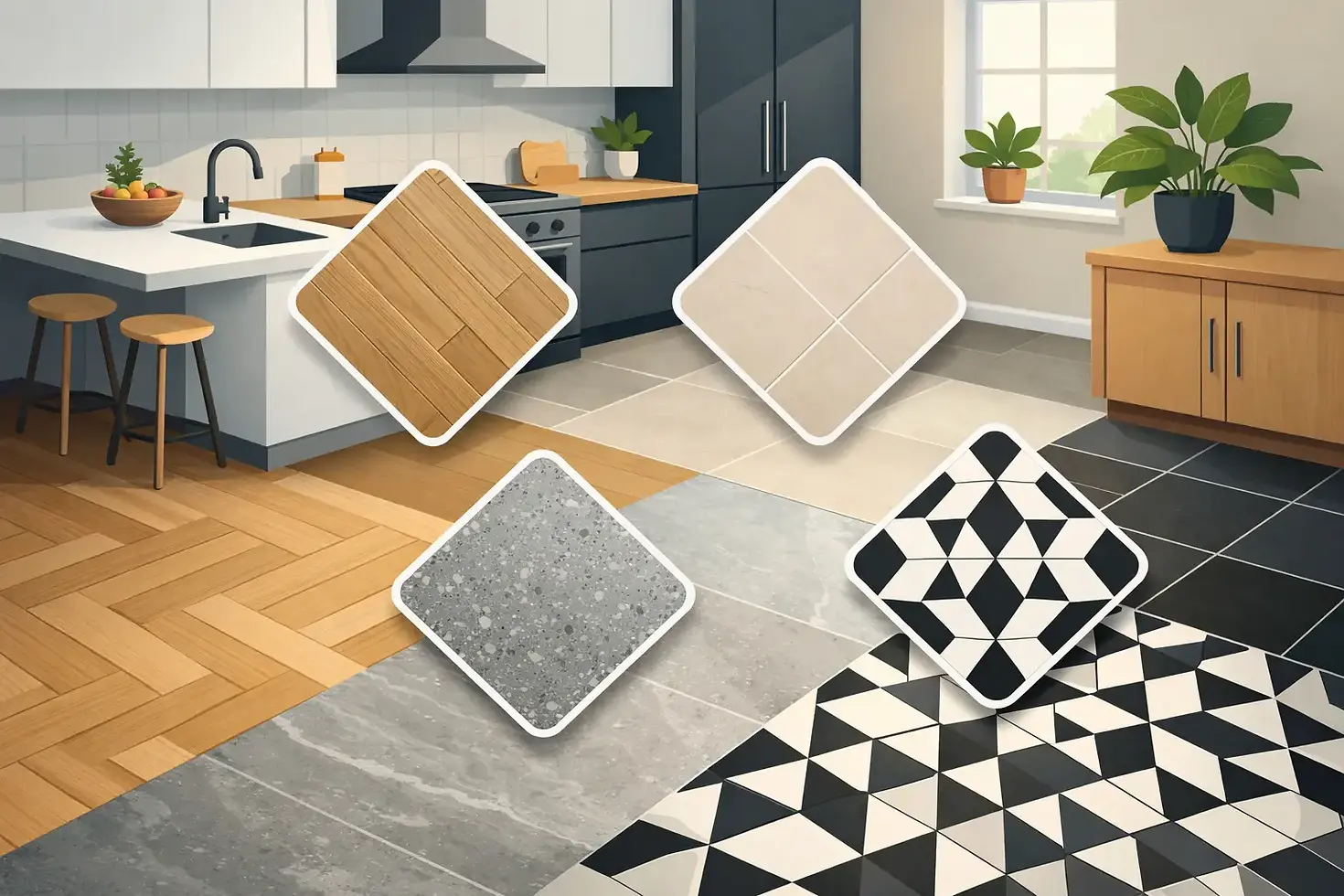
One of the most popular choices is a natural wood-effect plank in mid or warm tones. Think soft oak looks, gentle grain detail and a matt finish that keeps the floor feeling grounded rather than shiny. In a family kitchen, this style works because it softens hard cabinetry lines and makes the room feel welcoming.
It is particularly effective in open-plan spaces where the kitchen flows into dining or living areas. A wood-effect Amtico floor can help create continuity across the space, especially if you want the room to feel unified rather than broken into zones. Laying the planks lengthways can also make narrower kitchens feel longer and more open.
The trade-off is that very warm tones can date a scheme if everything else in the room also leans heavily beige or cream. In most cases, a balanced oak or neutral timber effect gives more long-term flexibility.
Grey stone effects for modern kitchens
If your kitchen has handleless units, pale quartz worktops or darker cabinetry, grey stone-effect Amtico can be a strong fit. This is one of those examples that suits modern homes because it adds a clean architectural feel without the coldness that some real stone or porcelain floors can bring.
In practical terms, stone-effect designs can hide light dust well, which is useful in high-traffic kitchens. They also work nicely with underfloor heating and can make the room feel crisp and contemporary.
That said, very cool greys need careful handling. If the cabinets, walls and worktops are all on the cooler side, the room can end up feeling slightly flat. Adding warmer timber accents, brass details or softer wall colours usually solves that.
Parquet layouts for a more tailored look
For homeowners who want the kitchen to feel more designed and less standard, parquet-style Amtico is often where the conversation turns. Herringbone and other patterned layouts can make a kitchen feel far more bespoke, particularly in period homes or high-spec renovation projects.
This is one of the best Amtico kitchen flooring examples for shaker kitchens, in-frame cabinetry and spaces where you want a little more character. A parquet floor can give a classic scheme extra depth, and it can also lift simpler cabinetry by making the floor a feature.
The important point here is scale. In a smaller kitchen, a very busy pattern may feel crowded if the room already has lots going on. In larger spaces, parquet tends to come into its own because the pattern has room to breathe.
Pale finishes for light, airy spaces
Kitchens with limited natural light often benefit from paler flooring. Soft limed wood tones, light stone effects and understated neutral designs can all help brighten the room without making it feel clinical.
This approach works particularly well in cottages, coastal-inspired kitchens or properties where you want a gentle, relaxed finish. Pale Amtico can also be useful if your cabinets are darker, because it creates contrast at floor level and stops the room feeling too heavy.
The practical question people usually ask is whether pale flooring shows everything. It depends on the exact colour and texture. Very flat, very light designs can show marks more readily, while textured finishes and slightly warmer pale tones are often more forgiving.
Dark floors for contrast and drama
At the other end of the spectrum, dark Amtico flooring can look exceptional in the right kitchen. Deep walnut effects, charcoal stone visuals and richer smoked timber tones all create contrast and can make cabinetry look sharper and more expensive.
This style tends to suit larger kitchens with good light, especially if you want a more dramatic interior. It can also work beautifully with lighter cabinets or natural wood furniture.
The trade-off is maintenance visibility. Dark floors can show dust, crumbs and footprints more clearly than mid-toned options. For some households that is not an issue, but in homes with children, pets or constant foot traffic, a mid-tone floor is often the more relaxed choice.
Choosing the right layout matters as much as the colour
When people picture flooring, they often focus entirely on the finish. In kitchens, layout is just as important. Straight plank installation gives a clean, dependable look and suits most spaces. It is often the best choice if the kitchen already has strong visual features such as a bold splashback, statement island or detailed cabinetry.
Herringbone brings more movement and is usually chosen when the floor needs to contribute more to the overall design. Larger tile formats in stone-effect ranges can make a room feel broader and more contemporary, particularly in open-plan layouts.
Thresholds and adjoining rooms should also be considered early. If the kitchen connects to a utility, hallway or living area, the floor should feel intentional across those transitions. This is where seeing samples properly and discussing the full plan can save expensive second thoughts.
How to match Amtico flooring to your kitchen cabinets
There is no single formula, but contrast usually works better than trying to match everything too closely. If cabinets are white or very pale, warmer oak effects, mid greys or soft stone visuals can anchor the room. If cabinets are navy, forest green or charcoal, lighter wood and stone finishes can stop the scheme becoming too dark.
Natural wood kitchens often benefit from restraint. Rather than choosing another strong timber effect that competes with the cabinetry, many homeowners prefer a quieter stone look or a subtle plank with limited grain variation.
Worktops matter too. Busy granite or heavily veined quartz already bring pattern into the room, so a simpler floor often keeps the scheme balanced. In a calmer kitchen with plain fronts and plain tops, you have more freedom to let the floor do some of the visual work.
Practical points worth thinking about before you choose
Kitchens are working rooms, so appearance should never be the only factor. Slip resistance, cleaning routine, room size and subfloor condition all deserve attention. If the subfloor is uneven, the finished result will suffer, no matter how good the product is.
Lifestyle should guide the final decision. Families often do best with mid-tone wood or stone effects that disguise daily marks. Design-led homeowners may be happier investing in parquet because the visual payoff is worth the extra detail. Landlords and property renovators may prioritise broad appeal and easy maintenance over a more individual statement.
This is also why showroom guidance can be so useful. Looking at a sample online is one thing. Comparing tones, textures and laying patterns in person, then viewing them against your cabinets, paint choices and lighting conditions, is often what turns a good decision into the right one.
Seeing Amtico kitchen flooring examples in a real setting
A well-chosen Amtico floor should not feel like a separate layer added at the end of a project. It should support the kitchen as a whole. The best examples are not always the boldest ones. Often, they are the floors that quietly make the cabinetry look better, improve the flow of the room and continue to work hard long after installation.
For homeowners planning a kitchen update, that is usually the real goal. Not just a floor that looks good on day one, but one that still feels right after years of breakfasts, dinner prep, family traffic and everyday use. If you are comparing options, seeing products first-hand and getting advice on layout, finish and fitting can make the choice far clearer - especially when the kitchen needs to balance style with real-world practicality.
The right floor should give you confidence every time you walk into the room, not just when you are choosing it.



Comments