
Can Laminate Be Waterproof? What Homeowners Need

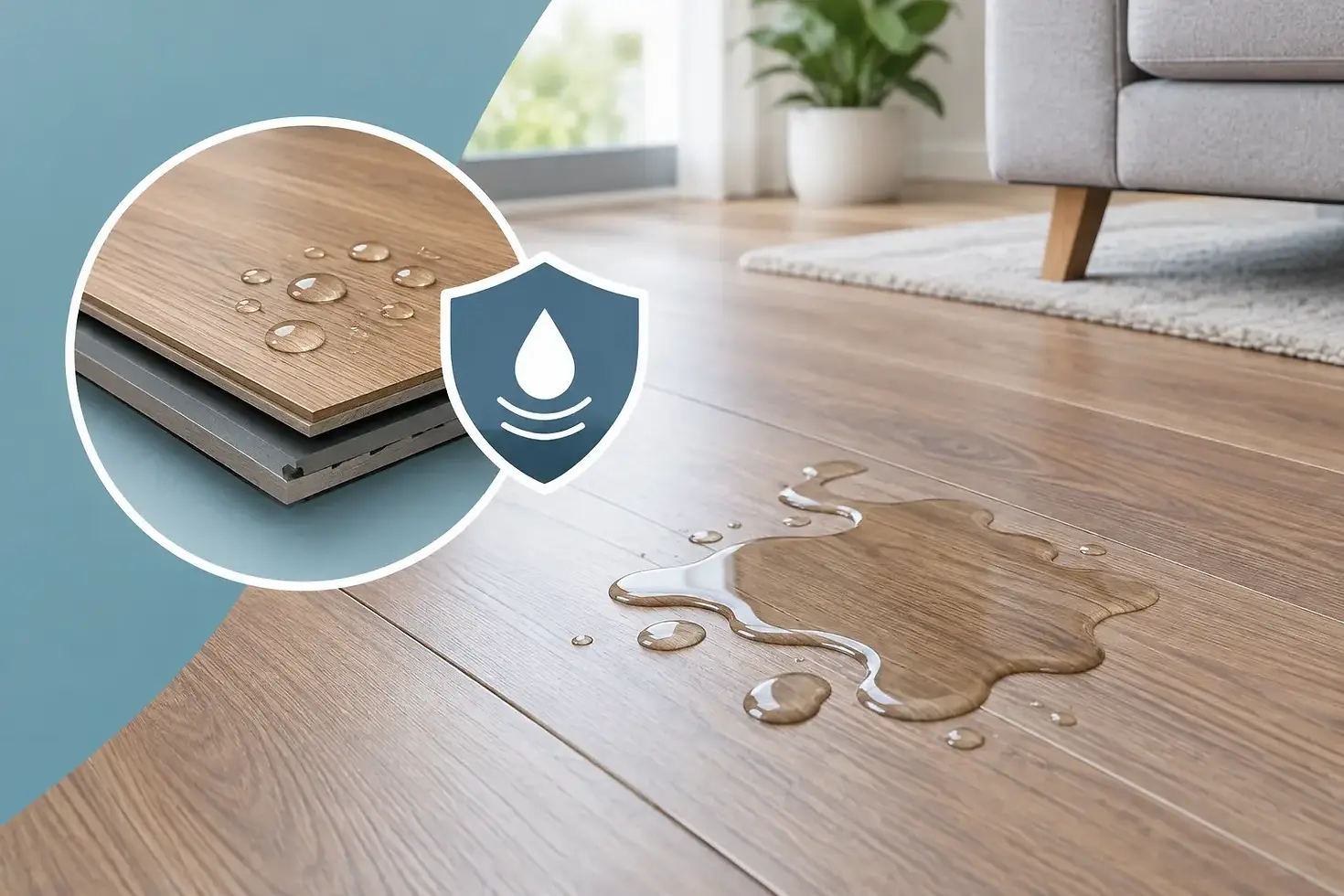
A dropped glass by the dining table is one thing. A leaking washing machine, wet dog shake or overflowing bath is quite another. So, can laminate be waterproof? In the strictest sense, no: traditional laminate flooring is not fully waterproof. However, modern water-resistant laminate can offer valuable protection against everyday splashes and short-term spills when it is specified, fitted and cared for correctly.
The distinction matters. Flooring may look similar in a showroom, but its performance in a busy family kitchen, hallway or rental property can be very different. Choosing the right product is less about finding a label that sounds reassuring and more about understanding how water reaches a floor, how long it remains there and what sits beneath the decorative surface.
Can laminate be waterproof, or only water-resistant?
Most laminate flooring is made from several layers pressed together. The top wear layer protects the printed décor, which gives laminate its convincing wood or stone appearance. Beneath that sits a dense core board, commonly high-density fibreboard, plus a balancing layer underneath.
The surface itself can be highly resistant to stains and moisture. The weak points are usually the joins between planks, the perimeter of the room, cut edges around door frames and pipe penetrations. If water works its way into the core, the board can swell. Once swelling has occurred, laminate rarely returns to its original shape.
Water-resistant laminate is designed to slow this process down. Depending on the range, it may use a more moisture-resistant core, sealed edges, tighter click joints or a protective treatment around each board. Manufacturers will often state a spill-resistance period, such as 24, 48 or 72 hours. That does not mean the floor can be left submerged for that length of time. It means ordinary spills should be removed within the stated timeframe without damaging the floor, provided the product has been installed in accordance with its instructions.
A genuinely waterproof floor is built differently. Luxury vinyl tile, sheet vinyl and many porcelain tiles do not contain a fibreboard core that can absorb water. They can be suitable for wet-prone areas where standing water is more likely, although joints, subfloors and installation details still need proper attention.
Where water-resistant laminate works well
For many homes, quality water-resistant laminate is an excellent practical choice. It can create a continuous, stylish finish through a living room, dining space, bedroom or hallway while offering better day-to-day spill protection than older laminate products.
It is particularly useful in kitchens where splashes from the sink, occasional spills and muddy footwear are part of normal life. The key is prompt cleaning. Wipe up water rather than allowing it to pool around cabinet plinths, dishwasher doors or the sink unit.
A downstairs cloakroom may also be suitable if the room is well ventilated, the product is approved by its manufacturer for that use and there is no regular risk of standing water. This is a decision worth discussing at the measuring stage, rather than assuming every water-resistant laminate can go into every room.
Laminate is often a strong option for homeowners who want the appearance of timber, a comfortable feel underfoot and a carefully managed budget. Contemporary designs have come a long way, with realistic grain detail, textured finishes and plank formats that can look at home in both traditional and modern interiors.
Rooms where laminate needs more caution
Bathrooms, en suites, wet rooms and utility rooms present a different level of risk. Steam, condensation, splashes around baths and showers, damp towels and unnoticed leaks all expose the floor to repeated moisture. Even a product described as water-resistant may not be the most dependable long-term choice here.
The same applies to homes where pets regularly come in wet, or where young children turn bath time into an enthusiastic splash zone. Laminate can cope with normal living, but it is not designed to act as a watertight basin.
For these spaces, luxury vinyl tile is often the more confident choice. Amtico and Invictus LVT, for example, offer attractive wood and stone effects with a waterproof construction, making them well suited to kitchens, bathrooms, hallways and open-plan family spaces. They also allow a coordinated design to run from room to room without asking one floor covering to do a job it was not made for.
The installation details that protect your floor
Even the best laminate can fail early if it is fitted poorly. Water resistance is not simply a product feature - it depends on the finished installation.
The subfloor must be sound, dry and suitably level before flooring is laid. Moisture rising from a concrete base, particularly in a new build or recently screeded area, can create problems from underneath. A professional installer will assess the subfloor and specify the correct moisture barrier or underlay where required.
Expansion gaps are equally important. Laminate moves slightly as temperature and humidity change, so it needs space at walls and fixed objects. Those gaps are normally concealed with skirting or beading. Filling them indiscriminately with sealant can restrict movement and cause other issues, while leaving vulnerable edges exposed can allow water ingress. The correct approach depends on the floor, the room and the manufacturer’s fitting guidance.
Door thresholds, kitchen units and pipework also deserve careful planning. Laminate should not be trapped beneath fixed heavy cabinetry unless the manufacturer specifically permits it. A well-considered fitting plan helps the floor expand naturally and avoids awkward, difficult-to-clean gaps where moisture can sit.
How to look after water-resistant laminate
A water-resistant laminate floor does not need complicated maintenance, but the right habits make a real difference. Use entrance mats to catch grit and rainwater, especially by patio doors and busy hallways. Lift spills with an absorbent cloth or mop rather than pushing water towards the joints.
For regular cleaning, vacuum with a suitable hard-floor setting or sweep with a soft brush. Use a lightly damp microfibre mop and a cleaner approved for laminate flooring. Avoid soaking the floor, steam mops and harsh abrasive products. Excess water is the problem laminate has been designed to resist, not invite.
If an appliance leaks or a large amount of water reaches the floor, act quickly. Remove the source where safe to do so, lift visible water, ventilate the room and inspect edges and joins over the following days. If boards begin to lift, cup or separate, it is sensible to seek advice before the affected area worsens.
Laminate or LVT: which is right for your home?
The choice is not simply waterproof versus non-waterproof. It is about how you use the room and what you want from the finished space.
Laminate can offer excellent value and a warm, realistic timber look. It is often a good fit for bedrooms, lounges, studies and lower-risk kitchen areas. Its click installation can also make it an efficient option for larger spaces, depending on the subfloor condition and layout.
LVT generally costs more once preparation and professional fitting are included, but it offers greater reassurance in areas exposed to water, frequent cleaning and heavy traffic. It is quieter underfoot than laminate, has a wide choice of laying patterns and can be repaired more selectively in some circumstances. The quality of preparation is crucial, particularly for gluedown LVT, because the subfloor finish will influence the appearance and longevity of the floor.
For a whole-home project, it can make sense to mix materials. A beautiful laminate may suit bedrooms and a formal living room, while waterproof LVT brings durability to the kitchen, utility and hallway. With thoughtful design, the change between surfaces can feel intentional rather than compromised.
Get advice before choosing on appearance alone
Flooring samples are useful, but they cannot show how a product will respond to your household’s routines, subfloor or room conditions. A free home measure gives you the opportunity to discuss moisture risks, transitions, door clearances and the practical demands of each space before committing to a design.
At Modeco Interiors, our flooring experts can help you compare water-resistant laminate with premium LVT options and recommend a finish that suits your home, lifestyle and budget. The most satisfying flooring choices are the ones that still look right after real life has happened on them.
If you love the look of laminate, choose it for the rooms where it can perform at its best. Where water is a regular part of the picture, selecting a genuinely waterproof alternative is often the simpler, smarter decision.


Comments