
Can Laminate Go in Kitchens?
- Modeco Interiors

- Jul 5
- 6 min read
A kitchen floor usually tells the truth faster than a showroom sample ever can. It has to cope with drips at the sink, chairs scraping back from the table, dropped pans, muddy shoes and the general pace of everyday life. So when homeowners ask, can laminate go in kitchens, the honest answer is yes - but only if you choose carefully and understand its limits.
Laminate is still a popular option because it gives you the look of wood or tile at a more accessible price point than many natural materials. It is also comfortable underfoot, relatively easy to maintain and available in a wide range of finishes. The question is not simply whether laminate can be used in a kitchen. The better question is whether it is the right choice for your kitchen, your household and the way you use the room.
Can laminate go in kitchens and still last?
It can, provided the environment is suitable and the installation is done properly. Modern laminate is more durable than many people expect. Good-quality products have a tough wear layer that stands up well to foot traffic, family life and day-to-day cleaning. In a kitchen diner or a kitchen with steady but manageable use, laminate can perform very well.
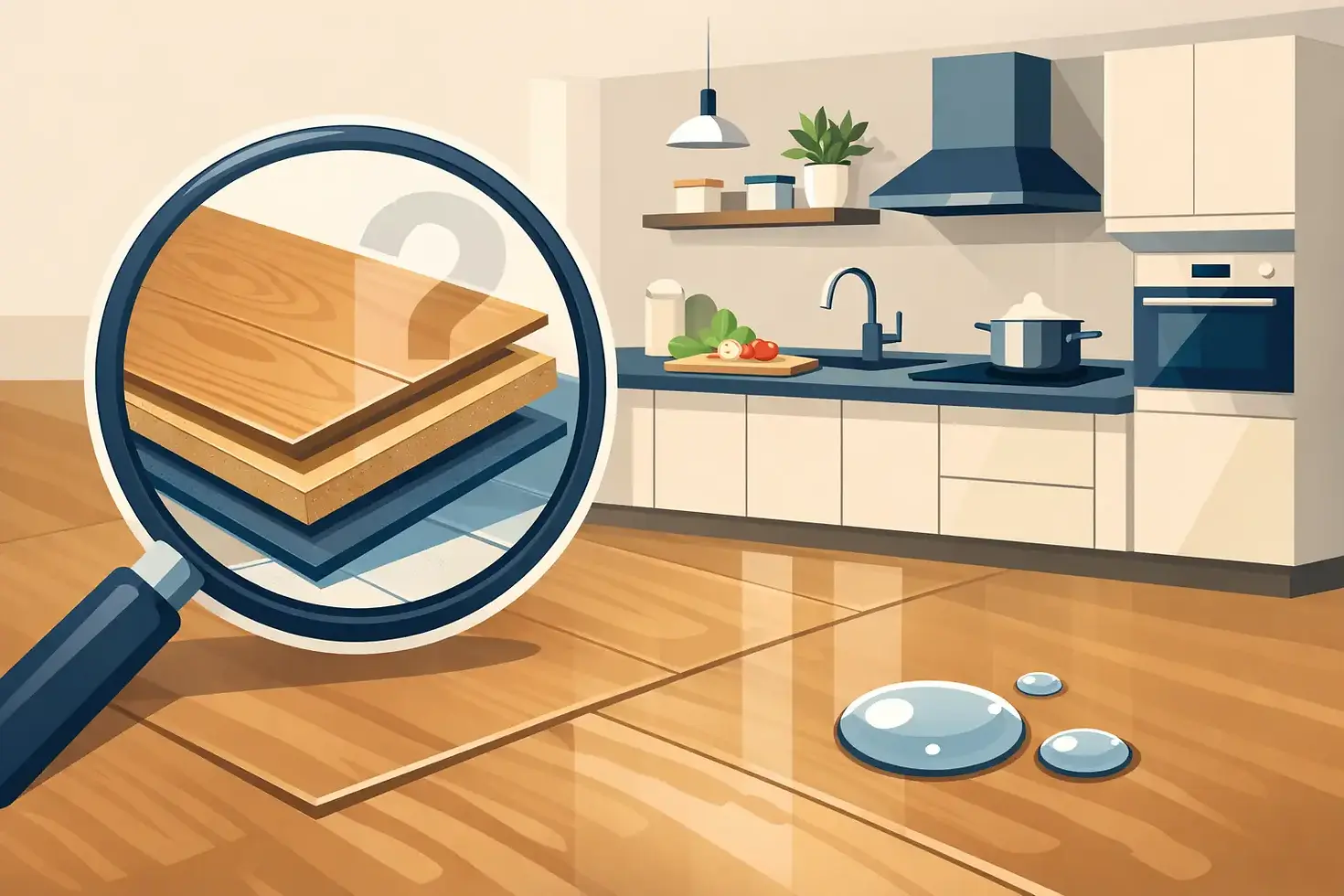
Where people run into problems is moisture. Laminate is not the same as luxury vinyl tile. It has a fibreboard core, and that core does not respond well to standing water if it gets through the joints. A small splash that is wiped up promptly is rarely an issue. A leaking appliance, repeated puddles near the sink, or water left to sit around the edges can cause swelling, lifting or damage over time.
That is why the answer depends on your kitchen habits as much as the product itself. If you have a busy family kitchen where spills are frequent, pets come in from the garden and water is often left on the floor, laminate may not be the most forgiving option. If your kitchen is well maintained and you are realistic about wiping up moisture quickly, it can be a sensible and attractive choice.
Where laminate works well in a kitchen
Laminate tends to work best in kitchens where the priority is style, comfort and value, and where the room is not constantly exposed to excess moisture. Open-plan kitchen diners are a common example. Many homeowners want one continuous floor that flows through cooking, dining and living zones, and laminate can achieve that look very effectively.
It also suits households that want a timber appearance without the cost or maintenance considerations of real wood. Some of the latest laminate designs have realistic grain detail, textured surfaces and convincing plank formats that lift the overall look of the room.
If you are refurbishing a property for resale or updating a kitchen on a defined budget, laminate can sit in a very practical middle ground. It often looks more refined than very low-cost sheet vinyl, while remaining more budget-friendly than premium LVT or engineered wood.
Where laminate is more of a risk
The main issue is not general wear. It is water ingress. Kitchens with frequent spill zones, younger children, utility-style traffic or older appliances carry more risk. The area in front of the sink, dishwasher and fridge freezer is worth thinking about carefully. Even a minor hidden leak can do more damage to laminate than to a waterproof floor.
There is also the question of long-term repair. If one section of laminate is damaged by water, replacing boards is not always straightforward, especially if the original product has been discontinued or if the floor runs beneath fitted units. With some other flooring types, that risk is easier to manage.
This is where professional advice matters. A floor can look perfect on day one and still be the wrong specification for the room. The best choice is not always the one that looks best on a sample board. It is the one that matches how the space actually functions.
What to look for if you are considering laminate
Not all laminate is made to the same standard. If you are thinking about putting it in a kitchen, quality matters. Cheaper laminate may seem appealing at first, but lower-grade boards often have weaker locking systems and less resistance to everyday wear.
A better option is to choose a product with strong joint integrity, a durable wear layer and, where available, enhanced water-resistant properties. Some modern laminate collections are specifically developed to offer improved moisture protection, which can make them a more practical fit for kitchens than older-style products.
Underlay and subfloor preparation also play a part. A kitchen floor needs to feel solid underfoot. If the subfloor is uneven or the underlay is unsuitable, movement in the boards can put stress on the joints over time. That, in turn, makes the floor more vulnerable to moisture getting in.
The finish matters too. Lighter wood effects can make a kitchen feel open and contemporary, while warmer tones can soften a larger family space. Narrower planks, wider boards and tile-effect laminate all create different visual results. A good flooring specialist should help you balance appearance with performance rather than asking you to choose one or the other.
Can laminate go in kitchens if it is professionally fitted?
Professional fitting makes a real difference. A well-installed laminate floor should have the correct expansion gaps, clean finishing details and a layout that works with the shape of the room. In kitchens, these details are not cosmetic extras. They affect how the floor performs.
Poor installation can leave vulnerable edges, awkward joins and unnecessary movement. That increases the chance of future issues, particularly around moisture-prone areas. Proper preparation and fitting give laminate its best chance of lasting well.
This is one of the reasons many homeowners prefer to visit a specialist showroom rather than buy on price alone. Seeing the flooring in person, comparing specifications and getting advice based on your room layout can prevent expensive mistakes. At Modeco Interiors, for example, that sort of guidance is central to helping customers choose a floor that looks right and lives well.
How laminate compares with LVT in kitchens
If you are torn between laminate and another option, LVT is often the most relevant comparison. Both can deliver a wood or tile look. Both are available in a wide variety of finishes. Both can suit modern and traditional kitchens.
The difference is in how they handle moisture. LVT is generally the safer choice for kitchens because it is designed to cope much better with water. That makes it especially appealing for busy family homes, high-use spaces and anyone who wants a floor with fewer compromises around spills and splashes.
Laminate, on the other hand, can offer excellent value and a very convincing timber look, but it asks a bit more from the homeowner in return. It needs prompt cleaning of spills and a realistic understanding of where it will and will not cope.
If your top priority is peace of mind, LVT often comes out ahead. If your budget is tighter and your kitchen conditions are fairly controlled, laminate may still be a perfectly reasonable choice.
Practical care if you choose laminate for a kitchen
A laminate kitchen floor does not need complicated maintenance, but it does need the right habits. Spills should be wiped up quickly rather than left to dry naturally. Cleaning should be done with a well-wrung mop rather than excess water. Door mats and sink mats can help reduce wear and moisture in the areas that take the most punishment.
It also helps to keep an eye on appliances and plumbing. A floor covering can only perform within the conditions it is given. If there is a slow leak under a washing machine or dishwasher, the flooring often takes the blame for a problem that started elsewhere.
Furniture protection is worth thinking about too. Chairs dragged repeatedly across the same area will wear any floor faster. Felt pads are simple, but they make a noticeable difference.
So, is laminate the right kitchen flooring for you?
If you want a stylish, cost-effective floor and your kitchen is not exposed to constant moisture, laminate can work well. It gives a smart finish, plenty of design choice and good day-to-day durability for many households.
If your kitchen sees frequent spills, heavy family traffic or you want the most water-tolerant option available, there are stronger alternatives. That does not make laminate a bad product. It simply means every floor has a setting where it performs best.
The right decision usually comes down to being honest about how you live. A beautiful floor should suit your routine, not just your mood board. If you choose with that in mind, you are far more likely to end up with a kitchen floor you still feel confident about years from now.



Comments